The Photosynthesis Twist That Shaped Human History
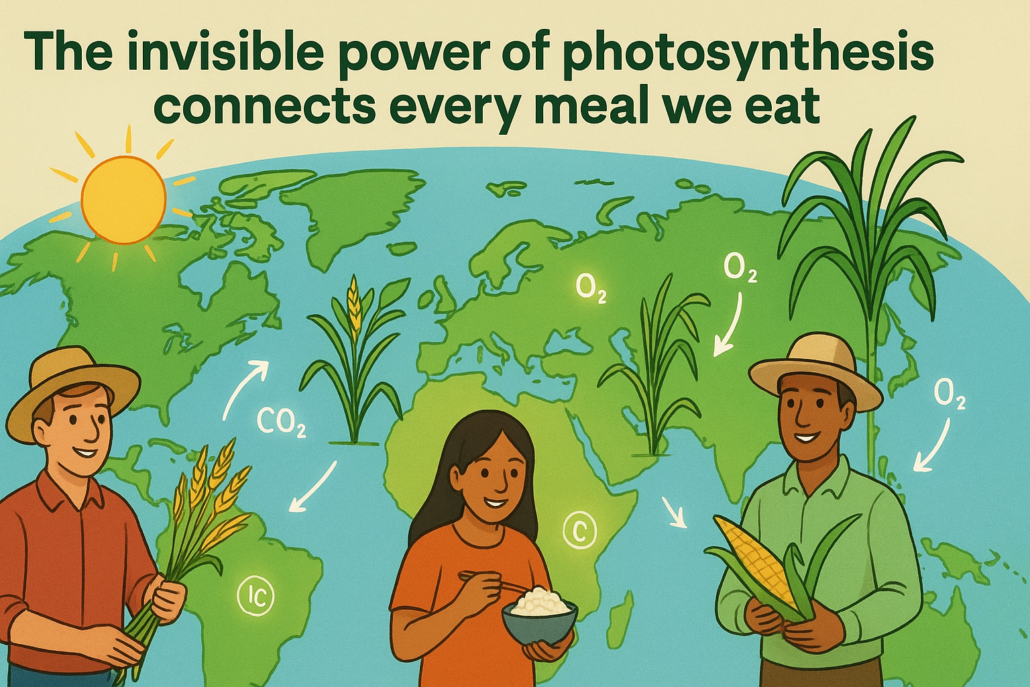
The invisible power of photosynthesis connects every meal we eat @curiosciencequest

What Can Plants Tell Us About Our Diet and the World?

Imagine if plants could tell stories, not just about themselves but about us, our ancestors, and even the climate of the Earth thousands of years ago. Sounds impossible, right? But scientists have discovered that plants leave behind subtle clues through the way they capture sunlight and carbon dioxide. These clues, hidden in the C3 and C4 photosynthetic pathways, help us uncover what people ate centuries ago, how ancient civilizations farmed, and even how climate change might affect our future.

So, what are these mysterious pathways? And why are they important enough to be taught in schools? Let’s explore the fascinating world of plant science, food tracking, and ecological detective work.


C3 and C4 Plants Explained: How Photosynthesis Adapts to the World Around Us
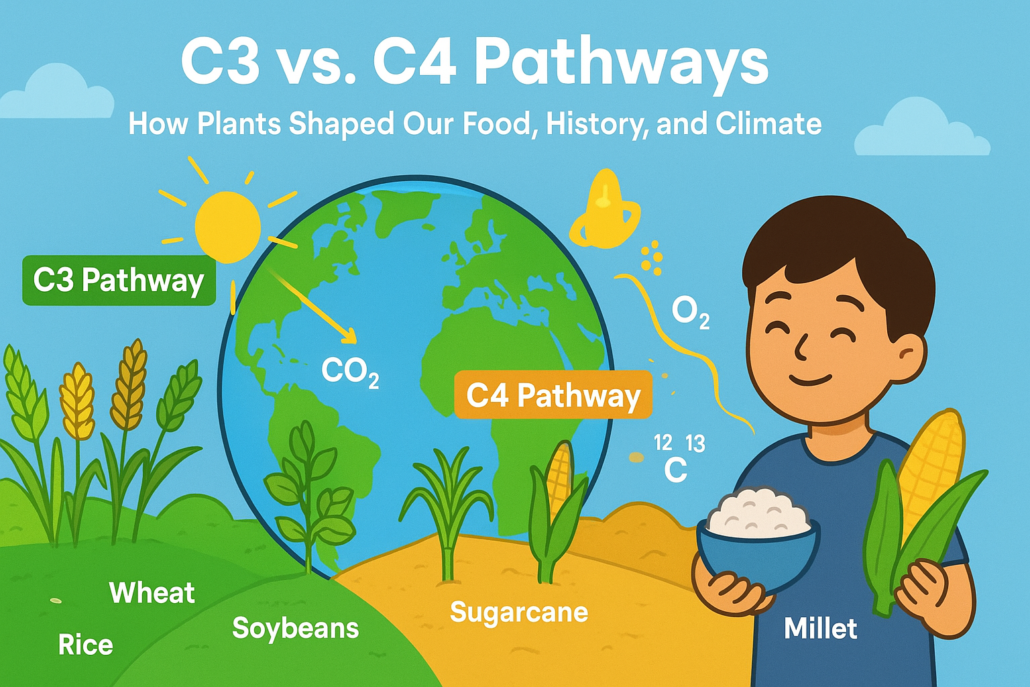
C3 vs C4 pathways @curiosciencequest

Before we can understand how plants reveal our secrets, we need to understand how they eat! yes, plants eat too! But instead of munching on food like we do, plants use photosynthesis to turn sunlight, carbon dioxide (CO₂), and water into glucose (a type of sugar) that fuels their growth.

But here’s the twist: not all plants photosynthesize the same way. Over millions of years, plants developed two major strategies to fix carbon from the air:

  1. C3 Pathway
  2. C4 Pathway

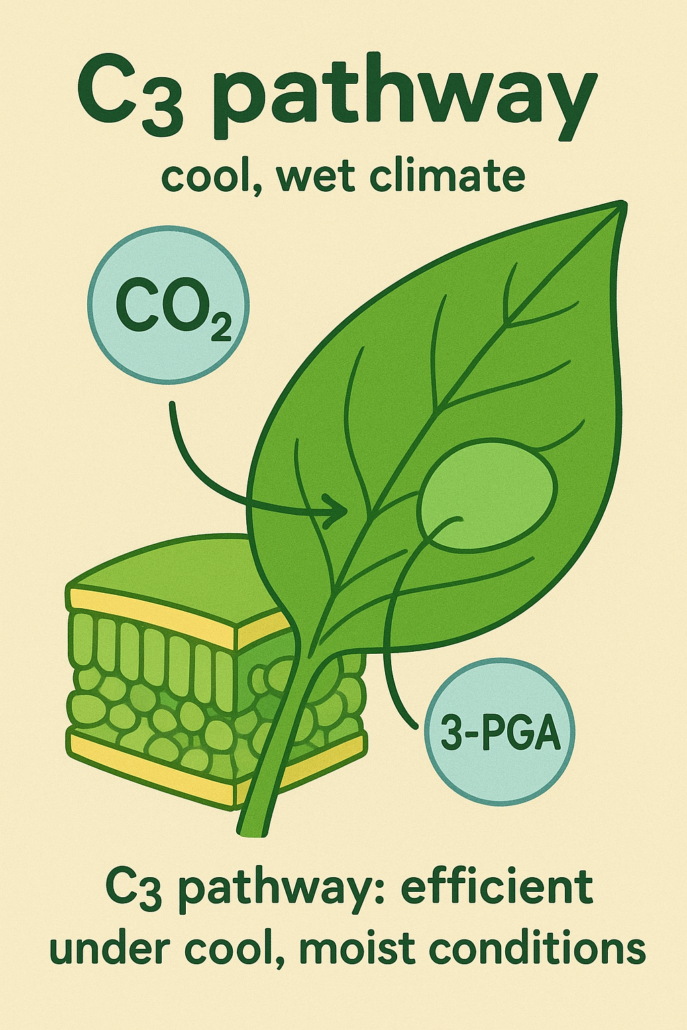
C3 Pathway @curiosciencequest

Meet the C3 Plants: The Everyday Performers

The C3 pathway is the most common type of photosynthesis. It is used by about 85% of all plant species on Earth.

In C3 photosynthesis, plants capture CO₂ and convert it into a 3-carbon molecule called 3-phosphoglycerate (3-PGA).

C3 plants thrive in cool, moist environments where sunlight is not too intense.

Examples of C3 plants:

Wheat, rice, oats, soybeans, potatoes, and most fruits and vegetables.
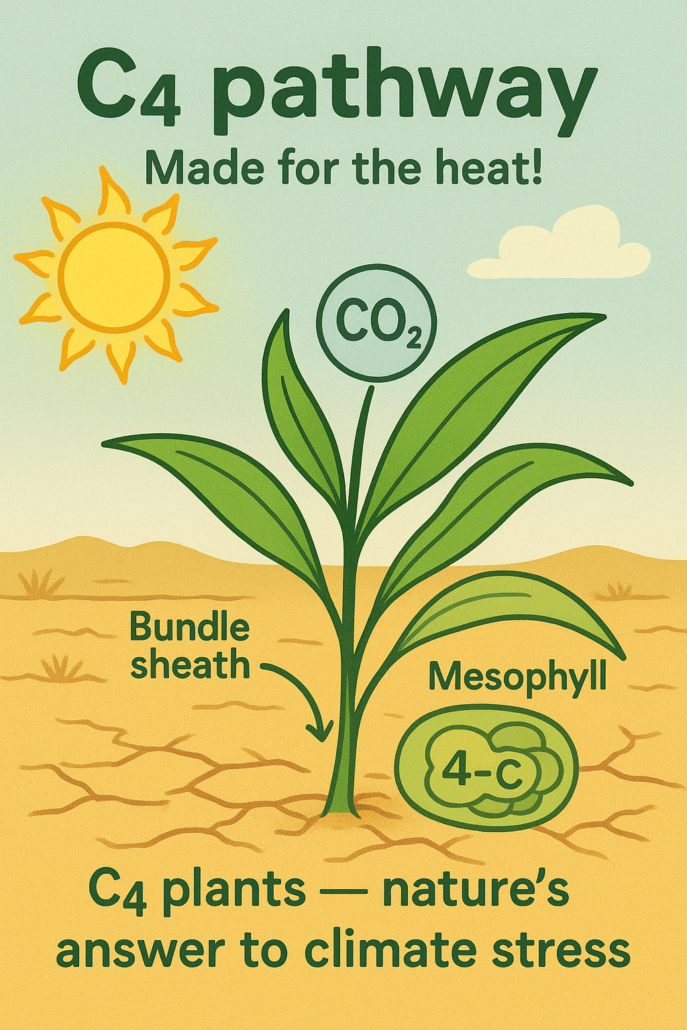

C4 Pathway @curiosciencequest

Meet the C4 Plants: The Desert Survivors

The C4 pathway is an adaptation that helps plants survive in hot, dry environments.

These plants convert CO₂ into a 4-carbon compound called oxaloacetate before entering the regular photosynthesis cycle. This extra step makes them more efficient in capturing CO₂, especially under harsh conditions.

C4 plants are more water-efficient and can photosynthesize even when the air is dry.

Examples of C4 plants:

Maize (corn), sugarcane, sorghum, and millet.


From Leaves to Life: Carbon’s Journey Through Us
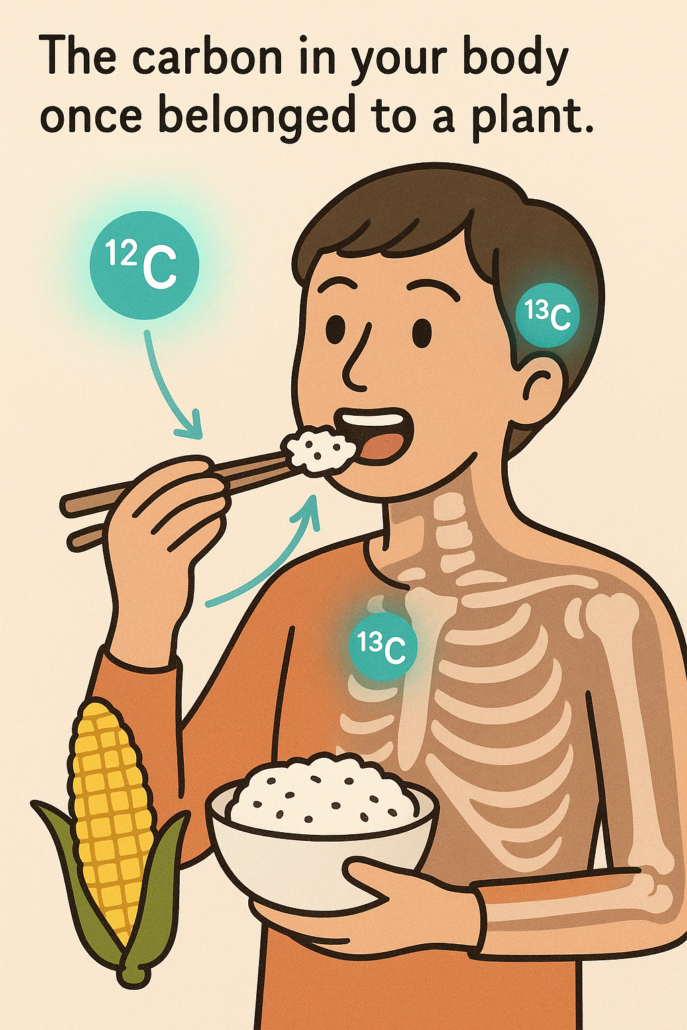
The carbon in your body once belonged to a plant @curiosciencequest

Now that we know how plants make food through photosynthesis, here is something amazing, C3 and C4 plants have different carbon “fingerprints.” When we eat these plants, or animals that ate them, their carbon becomes part of our body. These tiny carbon marks stay in our bones, teeth, and even hair, telling the story of what we eat.

Carbon Isotopes: Nature’s Invisible Markers

When plants absorb CO₂ during photosynthesis, they take in both carbon-12 (¹²C) and carbon-13 (¹³C) which are two stable forms of carbon called isotopes. However, C3 and C4 plants absorb these isotopes differently:

C3 plants prefer ¹²C and have lower levels of ¹³C.

C4 plants absorb more ¹³C and have higher levels of this heavier isotope.

When we eat these plants (or animals that ate these plants), the isotope ratios get stored in our bones, teeth, hair, and even fingernails. By measuring the ratio of ¹³C to ¹²C in biological samples, scientists can track diets and study past civilizations.

This measurement is expressed as δ13C (delta carbon-13) values, which show the relative amount of ¹³C in a sample.
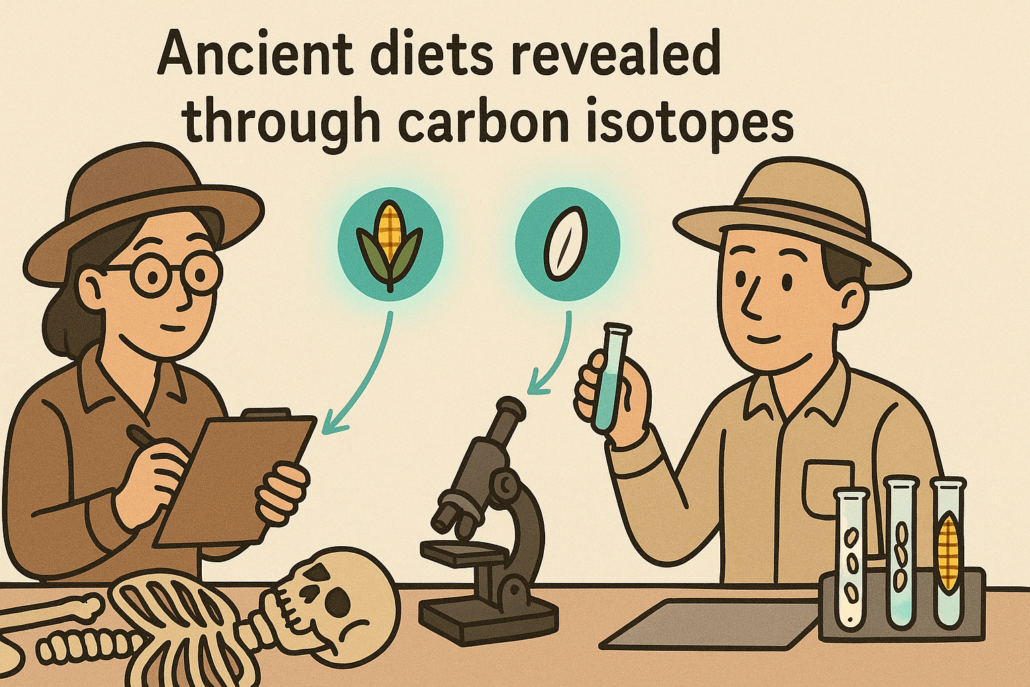

Ancient diets revealed through carbon isotopes @curiosciencequest

How Does This Help in Tracking Food Habits?

1. Reconstructing Ancient Diets

Archaeologists and anthropologists use carbon isotopes to uncover what people ate thousands of years ago.

  • For example, in ancient Mesoamerican civilizations like the Maya and Aztecs, maize (a C4 plant) was a staple food. By analysing δ13C values in ancient human remains, scientists found higher levels of ¹³C, confirming that corn made up a large part of their diet.
  • In contrast, people in Europe and Asia primarily consumed C3 plants like wheat and rice. Their remains show lower δ13C values, indicating a different dietary pattern.

2. Tracking Modern Food Habits

Carbon isotope analysis is not just for ancient history but it can also track modern diets.

  • If someone has higher δ13C values, it suggests they eat a lot of corn-based products (like corn syrup, commonly found in processed foods) or sugarcane.
  • This technique helps nutritionists and health researchers study the effects of processed foods on health.

3. Forensic Science: Solving Mysteries

Forensic scientists use isotope analysis to identify unknown individuals or track their movements.

  • Example: If a missing person had high δ13C values in their hair, it might indicate they lived in an area where C4 crops like maize or sugarcane were common.

This technique has been used in criminal investigations and even to identify unmarked graves from historical events


Connecting the Dots: What C3 and C4 Plants Teach Us About Life on Earth
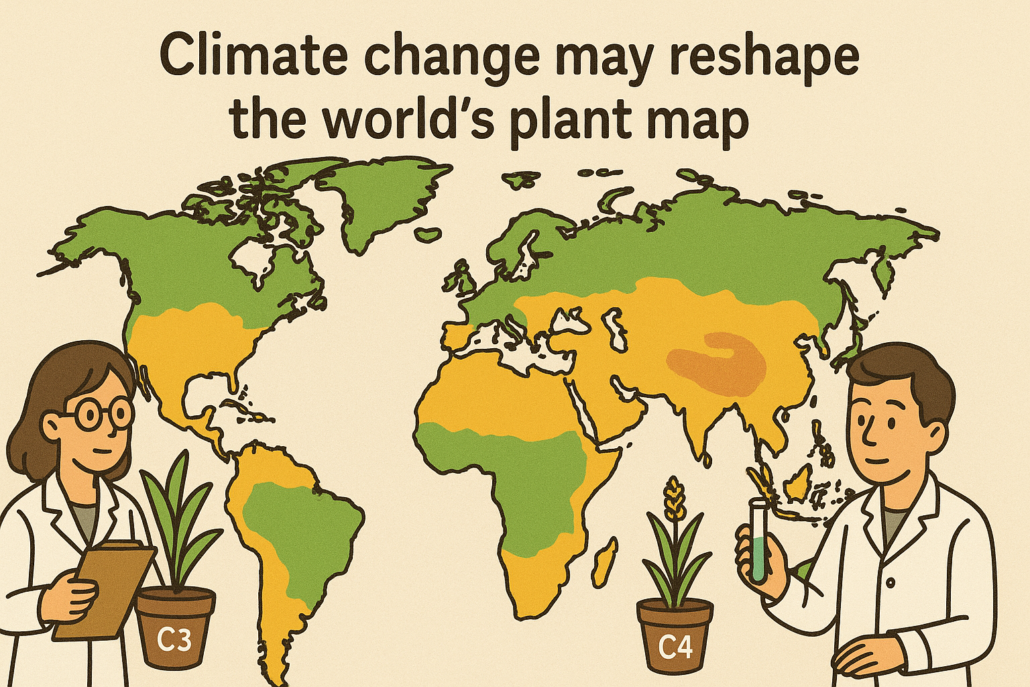
C3 C4 Pathway Climate change may reshape the world's plant map Curio Science Quest

1. Understanding Climate Change

C4 plants are better suited to hot, dry climates because they are more water-efficient. As the Earth’s climate changes, the distribution of C3 and C4 plants is shifting. By studying these shifts, scientists can predict how ecosystems and agriculture will respond to global warming.

  • Example: If certain regions become hotter and drier, we might see more C4 plants like maize and sugarcane replacing traditional C3 crops like wheat or rice.

2. Improving Agriculture

Scientists are exploring ways to engineer C3 crops to behave more like C4 plants, making them more efficient and climate-resilient.

  • Example: Researchers are trying to develop C4 rice to improve crop yields in warmer climates. This could help address food security in countries that rely heavily on rice.

3. Protecting Ecosystems

By tracking carbon isotopes in plants and animals, ecologists can monitor food chains and track animal migrations. This helps in conservation efforts and understanding how human activities are impacting wildlife.


The Silent Storytellers: How Carbon Remembers Our Past
Silent Storytellers Curio Science Quest

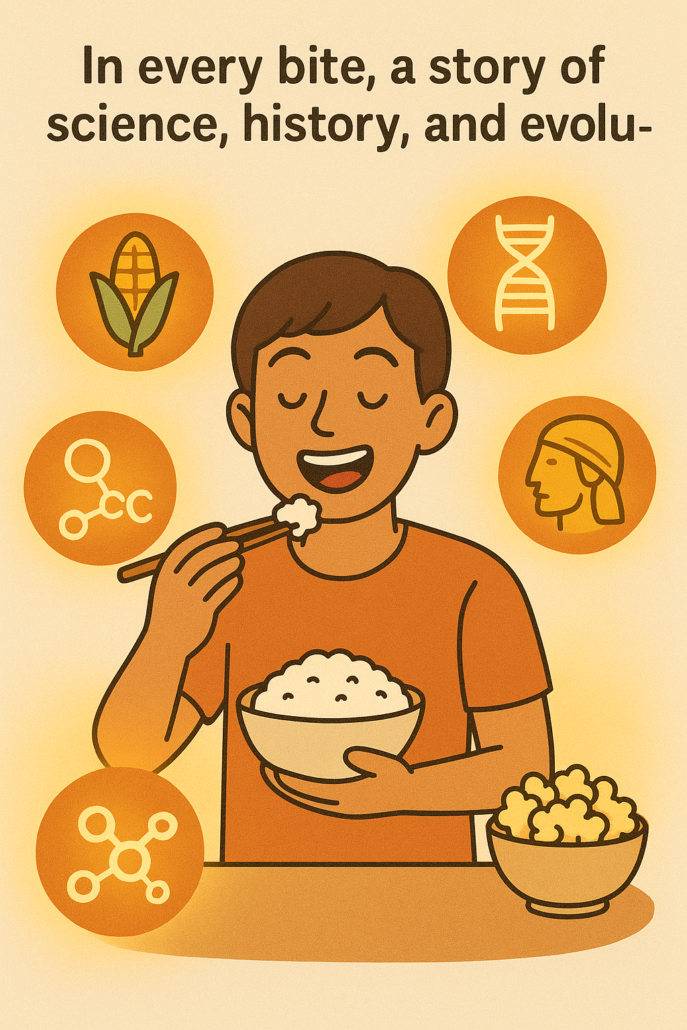
C3 and C4 plants are more than just green things growing in the ground. They are silent storytellers, holding secrets about our diet, history, and planet. By understanding these pathways, we can resolve mysteries about ancient civilizations, improve modern agriculture, and prepare for the future of our changing world.

So, the next time you bite into a bowl of rice (a C3 plant) or munch on popcorn (a C4 plant), remember you are tasting millions of years of evolution and tapping into a global scientific story!


Why Learn About This in School?
CURIO SCIENCE QUEST

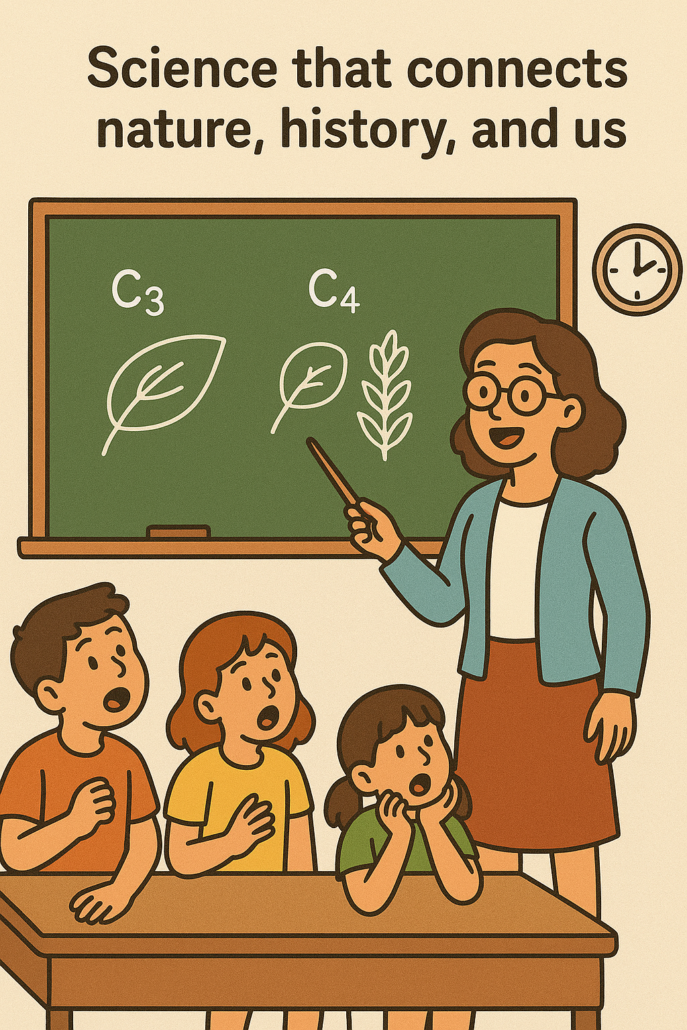
You might be wondering, “Why should I care about C3 and C4 pathways in school?” Here is why:

Connecting Science to Real Life:

Understanding these pathways shows how biology connects with history, climate science, nutrition, and even forensics. It is a perfect example of how interdisciplinary science works in the real world.

Developing Critical Thinking:

Learning about isotopes and photosynthesis is not just about memorizing facts. It teaches us to think critically, analyse data, and solve complex problems skills that are valuable in any career.

Preparing for the Future:

As climate change, food security, and health become global challenges, knowledge about plant biology and carbon cycles will be crucial in finding solutions.


Glossary of Scientific Terms (C3 vs. C4 Pathways)

1. Photosynthesis
The process by which green plants use sunlight, carbon dioxide (CO₂), and water to make food (glucose) and release oxygen.

2. C3 Pathway
The most common form of photosynthesis where plants produce a 3-carbon compound (3-PGA). Best suited for cool, wet conditions.

3. C4 Pathway
An advanced form of photosynthesis where plants produce a 4-carbon compound (oxaloacetate) to capture CO₂ more efficiently. It helps plants survive in hot, dry environments.

4. Glucose
A simple sugar that plants produce during photosynthesis and use for energy.

5. Carbon Dioxide (CO₂)
A colourless gas that plants take in from the air to perform photosynthesis. Humans and animals exhale it.

6.  3-Phosphoglycerate (3-PGA)
The first stable product formed in C3 photosynthesis; it contains three carbon atoms.

7. Oxaloacetate
A four-carbon molecule formed in C4 plants during the first step of photosynthesis, helping the plant trap carbon more efficiently.

8. Isotopes
Atoms of the same element that have different numbers of neutrons. For example, carbon-12 (¹²C) and carbon-13 (¹³C) are two isotopes of carbon.

9. Carbon-12 (¹²C)
A lighter and more common form of carbon used more by C3 plants.

10. Carbon-13 (¹³C)
A heavier and less common form of carbon that C4 plants absorb more than C3 plants.

11. δ13C (Delta Carbon-13)
A way of measuring the amount of carbon-13 in a sample to learn about what types of plants were eaten or present in the environment.

12. Stable Isotopes
Isotopes that do not change or decay over time, making them useful for tracking biological and environmental changes.

13. Archaeology
The study of human history through artifacts and remains, including analysis of bones and teeth to study ancient diets.

14. Forensic Science
The use of scientific methods to solve crimes or identify people, often through analysis of hair, bones, or tissues.

15. Bioapatite
A mineral in bones and teeth that stores chemical information, including carbon isotope ratios, useful for diet and migration studies.

16. Climate Resilience
The ability of plants, animals, or ecosystems to withstand or adapt to changes in climate conditions like drought or heat.

17. Food Security
The availability of food and people’s access to it; having reliable access to enough nutritious food.

18. Evolution
The process by which organisms change over generations due to natural selection and adaptation.

19. Ecosystem
A community of living organisms interacting with each other and their environment (air, water, soil).

20. Interdisciplinary Science
A scientific approach that connects different fields (like biology, chemistry, and history) to solve complex real-world problems.
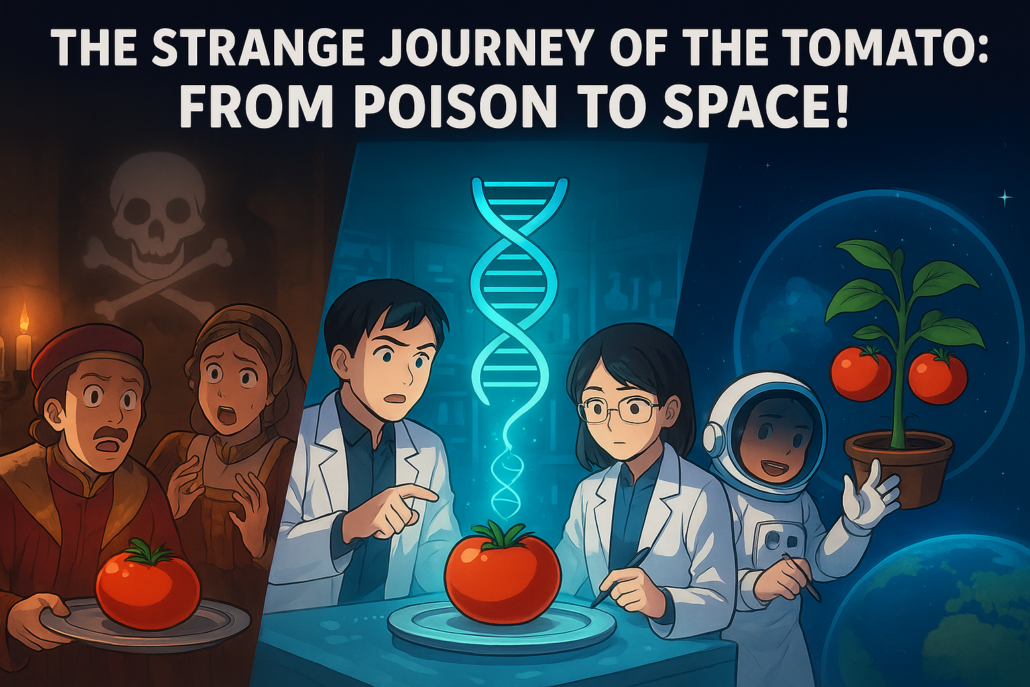

Did You Know Tomatoes Were Once Feared As Deadly Poison?

The Strange Journey Of The Tomato!!


A long time ago in Europe, people were scared of tomatoes. They thought this bright red fruit was deadly poison! Why? Wealthy families ate tomatoes on fancy pewter plates. The acid in the tomato pulled lead from the plates, and the diners often got sick and even died. So, people blamed the tomato instead of the real culprit: lead poisoning.

Years later, science solved the mystery. Tomatoes were not poison at all. In fact, they are full of vitamin C, antioxidants, and lycopene, a compound that helps protect our cells.


But the story does not stop there. Scientists have even grown tomatoes aboard the International Space Station! This experiment teaches us how to grow food in space, where soil and gravity work very differently.

From a feared “killer fruit” to a healthy space crop, the tomato’s journey shows how science uncovers the truth.


The Story Of Solar Eclipses: From Ancient Myths To Einstein


The Science And Story Of Solar Eclipses

What is a Solar Eclipse?

A solar eclipse happens when the Moon comes exactly between the Earth and the Sun, blocking the Sun’s light for a short time. This can only happen during new moon, when the Moon is directly aligned with the Sun. Depending on how perfectly they align, we see different types of eclipses:

  • Total Eclipse – the Moon completely hides the Sun.
  • Partial Eclipse – the Moon covers only part of the Sun.
  • Annular Eclipse – the Moon is slightly farther from Earth and looks smaller, leaving a bright “ring of fire.”

Eclipses are rare for any one location because the Moon’s shadow (the path of totality) is very narrow.


History Of Eclipse Observations

Humans have been fascinated by eclipses for thousands of years. Ancient records of eclipses go back more than 3,000 years, written in Babylonian, Chinese, and Indian texts. For early civilizations, a sudden darkening of the Sun felt mysterious and even frightening, often explained as a dragon, demon, or animal swallowing the Sun.

But surprisingly, many ancient astronomers learned to predict eclipses with great accuracy.

  • Babylonians (Mesopotamia) discovered the Saros cycle (about 18 years, 11 days). After this time, solar and lunar eclipses repeat in nearly the same pattern.
  • Indian astronomers in texts like the Surya Siddhanta used geometry to predict eclipses. They even explained eclipses without myth describing them as shadows cast by Earth or the Moon.
  • Chinese astronomers kept precise eclipse records that stretched for centuries, helping them refine calendars.

This shows that long before modern physics, people connected careful observation with mathematics to unlock nature’s secrets.


The 1919 Eclipse And Einstein’s Relativity

One of the most famous eclipses in science happened on May 29, 1919. At that time, Albert Einstein had recently published his General Theory of Relativity (1915). He predicted that massive objects like the Sun bend space itself, causing light to curve as it passes near them.

How could anyone test this? Normally, we cannot see stars close to the Sun because its glare is too bright. But during a total solar eclipse, the Sun is covered, and stars near its edge become visible.

British astronomer Arthur Eddington led an expedition to the island of Principe (near Africa) and another team went to Sobral in Brazil. They photographed stars during the eclipse and compared their positions with where they appeared in the night sky.

The result: the stars’ positions shifted, exactly as Einstein predicted. This was the first experimental proof of relativity, and it made Einstein a scientific celebrity overnight. A solar eclipse had changed physics forever.


Studying The Solar Corona

The Sun’s outer atmosphere, called the corona, is usually invisible because the bright surface of the Sun overwhelms it. But during a total eclipse, the corona shines beautifully as a glowing crown of plasma.

For centuries, eclipses were the only way to study the corona. Observers noticed its streamers, loops, and flares key to understanding the Sun’s magnetic field.

Now, scientists don’t need to wait for eclipses. Satellites such as SOHO (Solar and Heliospheric Observatory) and the Parker Solar Probe study the corona continuously using coronagraphs (special instruments that block the Sun’s disk artificially). But even today, eclipse observations remain valuable. Ground-based experiments can capture data at higher resolution for a brief but unique view.


Ground vs. Satellite Observations

  • Ground-based viewing: Offers direct human experience and very sharp optical data for a few minutes. But it is limited by weather and location.
  • Satellite observations: Provide continuous, global monitoring, unaffected by Earth’s atmosphere. They help us understand solar storms, coronal mass ejections, and space weather.

Together, they give us a complete picture of our star.


Predicting Eclipses: From Ancient Times To Software

In ancient times, people used cycles like the Saros cycle to know when eclipses would come. These predictions were surprisingly good, though not perfect for exact location and timing.

Today, astronomers use precise orbital mechanics. Computers calculate the motions of the Earth, Moon, and Sun down to fractions of a second. Modern software can tell us:

  • The exact path of totality,
  • The local time of contact points,
  • And even how long the eclipse will last in a particular city for years or centuries in advance.

For example, NASA eclipse maps already show eclipse paths up to the year 2100.


Fun Cultural Stories Of Eclipses

Eclipses are not just science they are also part of human imagination.

  • In Viking mythology, wolves Sköll and Hati chased the Sun and Moon, causing eclipses when they caught them.
  • In China, people believed a dragon swallowed the Sun. Traditional response? Beating drums and making noise to scare it away.
  • In India, the demon Rahu was said to drink the nectar of immortality but was beheaded. His immortal head occasionally swallows the Sun or Moon and causing eclipses.

Even though these were myths, the effort to explain a mysterious natural event shows how humans everywhere sought meaning in the sky.


Why Eclipses Still Matter

Solar eclipses are not just dramatic shows in the sky. They:

  • Help scientists test new instruments.
  • Allow the public to connect directly with cosmic events.
  • Inspire new generations to study astronomy.

Every eclipse is a reminder that we live in a universe of moving, interacting celestial bodies and where the dance of Sun, Moon, and Earth is both predictable and awe-inspiring.


Conclusion

From ancient priests with clay tablets, to Einstein’s revolution in 1919, to NASA satellites today, solar eclipses have guided our journey of discovery. They link myth and mathematics, fear and wonder, past and future.

The next time you witness a solar eclipse, you are not only watching a rare cosmic alignment but you are also standing in a tradition of human curiosity that stretches back thousands of years.


Did You Know How X-Rays Discovered!!

The Accidental Discovery That Changed Medicine Forever: Wilhelm Roentgen And The X-Ray


It all began with a flicker in the dark.

It was a cold November evening in 1895. Wilhelm Conrad Roentgen, a German physicist, was alone in his lab, surrounded by wires, glass tubes, and early electrical equipment. He had been experimenting with cathode rays an invisible stream of electrons inside a sealed glass tube.

He covered the tube in thick black cardboard, expecting all light to be contained.

But then… something strange happened.

Across the room, a fluorescent screen coated with barium platinocyanide began to glow.

How could this be?

There was no visible light escaping. The screen should have remained dark. Yet there it was: a soft, eerie luminescence, triggered by something unknown.

Roentgen didn’t panic. He didn’t ignore it.
He got curious.


A New Kind of Ray

Over the next few weeks, Roentgen worked tirelessly in secret. He suspected he had discovered a new kind of ray invisible, penetrating, and unlike anything known to science.

He called them “X-rays” the “X” standing for the unknown.

One night, in perhaps the most iconic moment of the experiment, he asked his wife Bertha to place her hand between the mysterious rays and a photographic plate.

When the image was developed, what they saw was astonishing:
 “Her bones.!”
 “Her wedding ring.!”
 “The soft shadow of her flesh gone.!”

It was the first X-ray image in human history.

Bertha reportedly exclaimed, “I have seen my death!”


The World Reacts

News of Roentgen’s discovery spread rapidly. Within months, X-rays were being used in medicine to locate bullets, diagnose fractures, and explore the human body without surgery.

This discovery revolutionized diagnostics, reducing pain, risk, and uncertainty for millions.

Roentgen refused to patent his invention. He believed it should serve humanity, not profit. For his contribution, he was awarded the first-ever Nobel Prize in Physics in 1901.


The Beauty of Serendipity

Wilhelm Roentgen didn’t set out to invent medical imaging.
He was investigating something entirely different.
But he kept his mind open. He paid attention to what others might have dismissed as a glitch.

And in that moment of unexpected glow, the world gained a new way to see itself literally.


Final Thoughts

The story of X-rays is more than just a scientific breakthrough.
It’s a reminder that some of the most important discoveries come from the unexpected, the unexplained, and the unintended.

So, the next time something doesn’t go to plan, pause for a moment.
You just might be standing at the edge of your own accidental genius.


Want to see this story come to life in 60 seconds?

Watch the animated YouTube Short:

[https://youtube.com/shorts/aqPIFPCiMZI?feature=share]


How The Nobel Prize Was Born: From Boom To Brilliance

The Man Behind The Explosion


Alfred Nobel wasn’t always associated with peace. In fact, he was better known for his invention of dynamite a powerful tool that revolutionized construction, mining, and yes, warfare.

Born in 1833, Nobel was a brilliant Swedish chemist, engineer, and inventor. Throughout his life, he held over 350 patents, but dynamite was by far the most famous and the most controversial.

While he saw it as a force for progress, many began to see Nobel as a man who had made destruction more efficient. And in 1888, that perception came crashing down on him in the most unexpected way.


The Obituary That Changed History

In 1888, Alfred Nobel’s brother Ludvig passed away. But a French newspaper, mistakenly thinking Alfred had died, published a premature obituary titled:

“The Merchant of Death is Dead.”

The article condemned Nobel for profiting from explosives and portrayed him as a villain whose legacy was one of violence and death.

Imagine reading that… about yourself.

It shook Nobel to his core. For the first time, he was forced to face how the world might truly remember him not as a scientist, but as a symbol of destruction.


The Will That Sparked A Legacy

Determined to change the narrative, Nobel spent the next years quietly crafting a different kind of legacy.

In 1895, just a year before his death, he signed a will that shocked his family and the world:

He left the majority of his fortune over 90% to establish a set of prizes that would be awarded to people who bring the “greatest benefit to humankind.”

His will named five areas of contribution:

  • Physics
  • Chemistry
  • Medicine
  • Literature
  • Peace

A Prize For World-Changers

Since 1901, the Nobel Prizes have become the world’s most prestigious honours celebrating scientists, writers, activists, and leaders who push humanity forward.

Winners have included:

  • Marie Curie, for her work on radioactivity
  • Martin Luther King Jr., for civil rights and peace
  • Malala Yousafzai, for fighting for girls’ education
  • Albert Einstein, for his revolutionary theories in physics

The list goes on a who’s who of humanity’s most brilliant minds and bravest hearts.


What Can We Learn From Alfred Nobel?

Alfred Nobel’s story is not just about prizes.

It’s about reflection, redemption, and the power of legacy.

He saw how the world misunderstood his impact and instead of defending his past, he reimagined his future.

He chose to turn his invention of destruction into a platform for discovery, progress, and peace.


 Still Curious?

So, how was the Nobel Prize born?

Not from celebration, but from a moment of doubt a misprinted obituary that forced one man to ask a powerful question:

“How will the world remember me?”

That question, and the bold action that followed, gave birth to a tradition that still shapes our world today.


What Can a Fruit Fly Teach Us About Ourselves? More Than You Think


The Tiny Genius That Changed Science: Drosophila melanogaster


The Little Fly With a Big Secret
You have probably seen it buzzing around your bananas — tiny, fast, and easy to miss. But did you know this little fly has helped scientists unlock some of the biggest mysteries in biology?

👉 Meet Drosophila melanogaster — the common fruit fly and the unexpected superstar of science!

This tiny insect may live for just a few weeks, but it’s made a massive impact. For over 100 years, scientists have studied fruit flies to discover how traits like eye colour, height, and even diseases are passed from parents to children. In fact, this bug was key to figuring out how genes work — long before we could even see DNA!

From your kitchen to the world’s top laboratories, the fruit fly has proven that even the smallest creatures can make the biggest difference.


A Riddle to Begin…

Let’s start with a riddle:

“Tiny wings, a simple fly,
Yet I helped science touch the sky.
With mutants, traits, and gene displays,
In my short life, I led the way.
What insect launched genetic fame?”

Answer: Drosophila melanogaster — The fly that taught humans about heredity!


Why Fruit Flies?

You might wonder: why study flies when we’re trying to understand human biology?

Well, it turns out that fruit flies are a perfect model organism for several reasons:

  • Short Life Cycle: A fruit fly grows from an egg to an adult in about 10 days. This means scientists can observe many generations quickly.
  • Simple Genome: Fruit flies have only 4 pairs of chromosomes, making it easier to study their DNA.
  • Easy to Keep in the Lab: They are small, don’t take up much space, and reproduce quickly — a dream for scientists!
  • Surprisingly Similar to Humans: Even though they’re tiny, fruit flies share about 60% of their genes with humans. Many of the genes that control development and disease in flies are similar to those in us.

The Beginning of Genetic Discovery

The real fame of Drosophila started in the early 1900s with a scientist named Thomas Hunt Morgan. He and his team at Columbia University began experimenting with fruit flies to understand how traits are passed from one generation to the next.

Here’s what they discovered:

  • Mutations Matter: By studying flies with white eyes (instead of the usual red), Morgan proved that genes are carried on chromosomes.
  • Sex-Linked Traits: He also showed that some traits are linked to sex chromosomes, which helped explain why some genetic diseases affect boys more than girls.
  • Gene Mapping: Morgan’s team created the first genetic maps, showing where genes are located on a chromosome.

For his ground breaking work, Thomas Hunt Morgan won the Nobel Prize in 1933. His research with Drosophila laid the foundation of modern genetics.


A Tiny Teacher in Modern Science

Even after more than 100 years, fruit flies are still teaching us new things!

Here’s what they’re helping us study today:

  • Brain and Behaviour: Scientists study how fruit fly brains control learning, memory, and sleep.
  • Disease Research: Fruit flies are used to model diseases like cancer, Parkinson’s, and Alzheimer’s — helping to test treatments.
  • Development: From a single cell to a full adult, fruit flies help us understand how living things grow and develop.

All of this is possible because we can control and observe mutations easily in fruit flies. Their transparent embryos, fast life cycle, and detailed genetic tools make them ideal for deep scientific exploration.


The Legacy of a Little Fly

From the kitchen counter to the Nobel stage, the journey of Drosophila melanogaster is nothing short of amazing. It has shown the world that even the smallest creatures can reveal life’s biggest secrets.

This tiny fly continues to help us answer questions like:

  • How do genes control growth?
  • Why do genetic diseases happen?
  • Can we fix or treat genetic disorders?

And many more…


Want to Explore More?

If you loved learning about this tiny genius, there’s so much more to explore in the world of genetics! From bacteria and worms to mice and zebrafish, science uses many amazing creatures to unlock the secrets of life.

Subscribe to our website for more fun and fascinating science facts.
Share this blog with fellow science lovers, and
Tell us in the comments — what other model organisms would you like to learn about next?


💡 Fun Fact:

A single female fruit fly can lay over 500 eggs in her lifetime. No wonder labs always have plenty of flies to study!


Monarch Butterflies : One Of The Natures Wonder

Story of Monarch Butterfly

Did you know that the monarch butterfly undertakes one of the most incredible migrations on Earth? Prepare to be amazed by the secrets of this iconic insect.

Every year, millions of monarch butterflies travel thousands of miles. They journey from Canada and the United States to overwintering sites in Mexico and California. This multi-generational migration is a true marvel of nature.

Monarch caterpillars feed exclusively on milkweed plants. These plants contain toxins that make the caterpillars, and subsequently the butterflies, poisonous to predators. This clever defence mechanism helps them survive.

The monarch’s life cycle is a stunning example of metamorphosis. From a tiny egg to a vibrant butterfly, each stage is a testament to nature’s artistry. The bright orange and black wings serve as a warning to potential predators.

Sadly, monarch populations are declining due to habitat loss and climate change. Protecting milkweed plants and their overwintering sites is crucial for their survival. We must act now to ensure future generations can witness their beauty.

Learn more about monarch butterfly conservation efforts and how you can help! Visit the websites of organizations like the World Wildlife Fund or the Monarch Joint Venture to discover ways to support these incredible creatures. Plant milkweed in your garden, reduce pesticide use, and spread awareness about their plight. Together, we can make a difference!

Read more

Why Is Gregor Mendel Called the Father of Genetics? The Answer May Surprise You


“Gregor Mendel, an Augustinian monk with a passion for experimentation, laid the foundation of modern genetics in the mid-19th century. Through meticulous crossbreeding of pea plants, he uncovered the fundamental laws of inheritance — decades before the discovery of DNA — securing his place in history as the Father of Genetics.”


Gregor Mendel, an Augustinian monk in the mid-19th century, conducted ground breaking experiments that laid the foundation of modern genetics. Working in a monastery garden during the 1850s and 1860s, Mendel systematically cross-pollinated pea plants and meticulously recorded how specific traits—such as flower colour, seed shape, and plant height—were inherited across generations.

He Conducted Controlled Experiments

Mendel applied a rigorous scientific approach to his experiments, isolating variables and maintaining detailed records. His use of large sample sizes and statistical analysis was far ahead of its time, ensuring the reliability of his findings.

He Inferred the Existence of “Genes”

Although the term gene had not yet been coined, Mendel theorized that hereditary traits were governed by discrete “factors” passed from parent to offspring. These factors, now recognized as genes, explained the consistent patterns he observed.

He Discovered Fundamental Laws of Inheritance

Mendel identified two core principles that underpin modern genetics:

  • Law of Segregation: Each organism carries two “factors” for a trait, but only one is passed on to offspring.
  • Law of Independent Assortment: The inheritance of one trait is independent of others, assuming the genes are on different chromosomes.

His Work Was Initially Overlooked

Published in 1866, Mendel’s research went largely unrecognized until around 1900, when three separate scientists—de Vries, Correns, and von Tschermak—independently verified his conclusions. By then, advances in cytology made it clear that Mendel’s “factors” corresponded to structures observed in cells during reproduction.

He Founded the Field of Genetics

Today, Mendel’s principles form the core of classical genetics. His work underpins modern developments in molecular biology, genetic engineering, medicine, agriculture, and evolutionary biology. Every biology student studies Mendel’s pea plant experiments as the starting point of genetic science.

Did You Know Who’s the Father of Indian DNA Fingerprinting?


Did You Know Who’s the Father of Indian DNA Fingerprinting? Meet Dr. Lalji Singh

Have you ever watched a crime show where the police say, “We found the DNA match”?
That’s because of a science method called DNA fingerprinting. And in India, one amazing scientist brought this technology to us. His name was Dr. Lalji Singh, and he is known as the Father of Indian Genetic Fingerprinting.


Who Was Dr. Lalji Singh?

Dr. Lalji Singh was a great Indian scientist. He was born in a small village in Uttar Pradesh in 1947. His family was not rich, but he loved studying science. He worked very hard and followed his dream.

He became one of the top scientists in India.


What Is DNA Fingerprinting?

Every person has a special DNA pattern. It’s like your own secret code. DNA fingerprinting is a method used to find out someone’s identity using their DNA.

It can help in solving crimes, finding missing people, or even checking family relations.

Dr. Lalji Singh was the first person to bring this technology to India. That’s why he is called the Father of Indian DNA Fingerprinting.


How Did He Help India?

Dr. Singh’s work helped India in many important ways:

  • He helped solve many criminal cases using DNA fingerprinting.
  • He helped find the identity of people who died in disasters.
  • He used DNA to protect wildlife and study rare animals.
  • He helped in family disputes by checking DNA for parentage.

More Cool Facts About Him

  • He worked at the Centre for Cellular and Molecular Biology (CCMB) in Hyderabad.
  • He became the Vice-Chancellor of Banaras Hindu University (BHU).
  • He loved science so much that he kept working even after retirement age.

A Thought to Remember

“Science is the key to solving many mysteries — from the crime scene to the jungle.”

This idea is inspired by the amazing work Dr. Lalji Singh did during his life.


Why He Is Important

Dr. Lalji Singh proved that even a person from a small village can change the world with knowledge and hard work. He made India proud and inspired many young minds.

Next time you hear about DNA in the news, remember the Indian scientist who made it all possible — Dr. Lalji Singh.


Think You Know Charles Darwin? Discover the Hidden Side of the Evolution Icon

Early Life and Education

  • Born on February 12, 1809, in Shrewsbury, England.
  • Came from a wealthy family — his grandfather Erasmus Darwin was also a respected naturalist.
  • Initially studied medicine at the University of Edinburgh, but dropped out due to a dislike of surgery.
  • Later enrolled at Cambridge University to study theology — but his real passion was natural science.

The Voyage of the HMS Beagle

  • In 1831, Darwin joined HMS Beagle as a naturalist for a 5-year scientific voyage around the world.
  • The Galápagos Islands had a profound impact on his thinking about species variation and adaptation.
  • He observed finches with different beak shapes — later key to forming his theory of natural selection.
  • During the voyage, he collected thousands of specimens, many of which were previously unknown to science.

Theory of Evolution

  • Darwin’s theory proposed that species evolve over time through natural selection.
  • He waited over 20 years to publish his findings, fearing backlash from the religious and scientific communities.
  • In 1859, he published “On the Origin of Species”, a landmark work in biology.
  • The book sold out on the first day and changed scientific thought forever.
  • He described “descent with modification”, the idea that all species share common ancestors.

Scientific Impact

  • Darwin’s work laid the foundation for modern evolutionary biology.
  • He was the first to explain adaptation and speciation through natural mechanisms.
  • His theory has since been supported by genetics, fossil evidence, and molecular biology.
  • Although controversial at first, evolution is now a cornerstone of biological science.

Later Life and Legacy

  • Darwin suffered from chronic illness for much of his life, possibly Chagas disease or psychosomatic disorders.
  • He was buried at Westminster Abbey, near Sir Isaac Newton — a rare honour for a scientist.
  • Today, Charles Darwin is recognized as one of the most influential scientists in history.