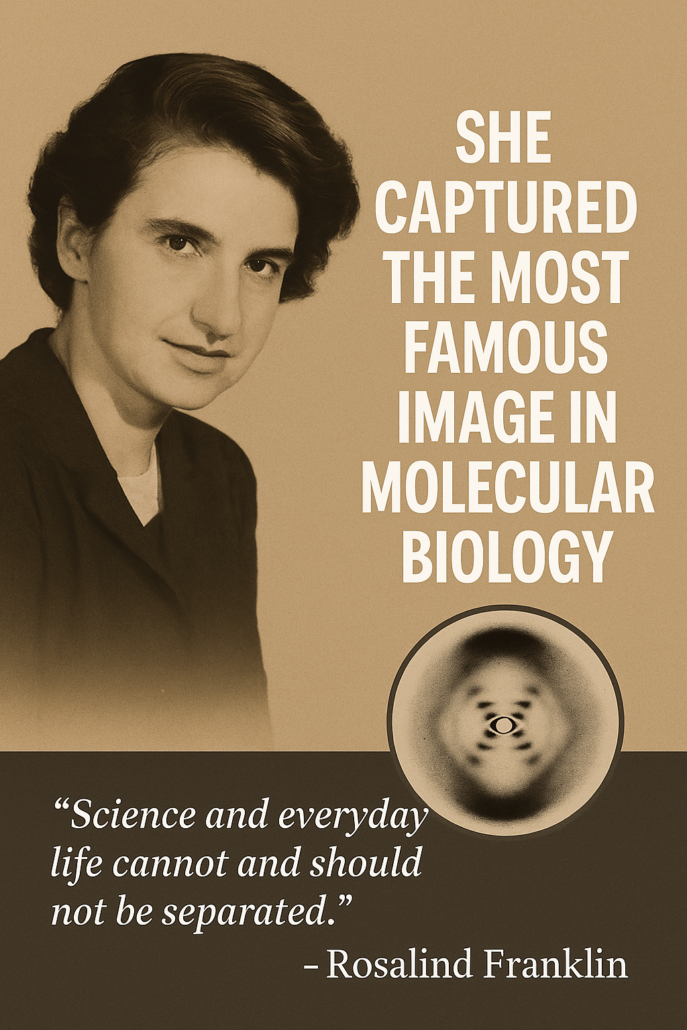
Rosalind Franklin : The Unsung Hero Who Discovered Double Helix

Rosalind Franklin:

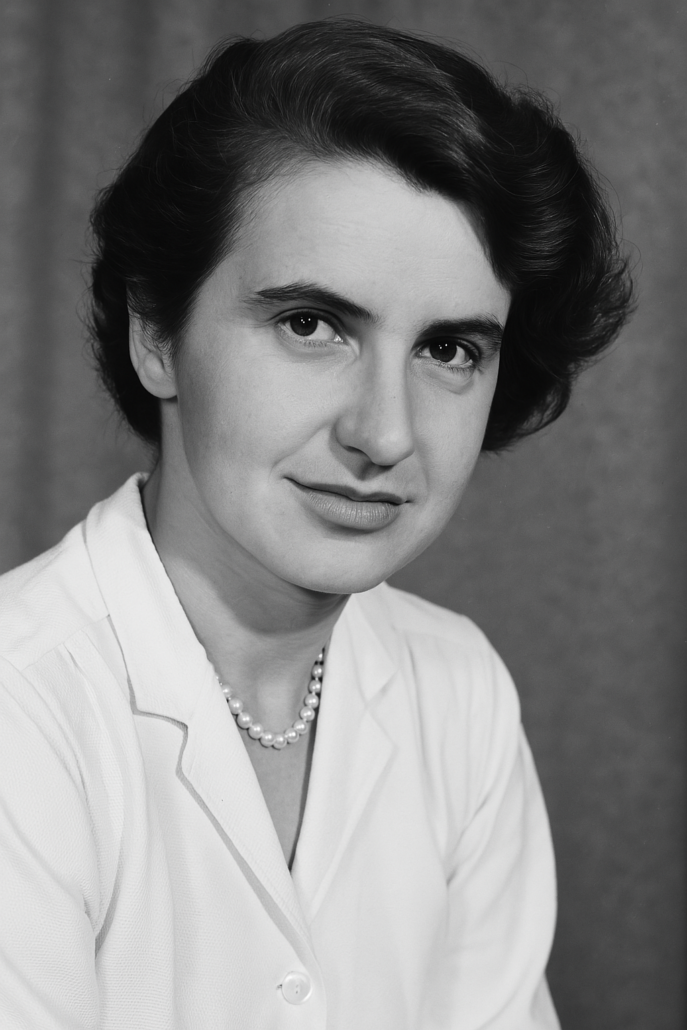
Rosalind Franklin was born on July 25, 1920, in London, England. She showed a strong interest in science and math from a young age. She studied chemistry at Cambridge University, one of the top universities in the world.

Rosalind Franklin’s Achievements:

  1. She Captured the Most Famous Image in Molecular Biology Rosalind Franklin took “Photograph 51”, a critical X-ray diffraction image of DNA. This image provided the first clear evidence that DNA has a helical structure, which directly led to the model proposed by Watson and Crick.
  1. She Pioneered Two Fields: DNA and Viruses While she is most famous for her DNA work, Franklin made significant contributions to virology. Her work on the tobacco mosaic virus (TMV) revealed that its RNA is located inside a hollow cylindrical protein shell — a major advancement in understanding viral structure.
  2. Her Work on DNA Was Shared Without Her Permission Maurice Wilkins, a colleague at King’s College, showed Franklin’s Photograph 51 to James Watson without her knowledge. This played a crucial role in Watson and Crick’s double helix model — yet Franklin wasn’t credited properly at the time.
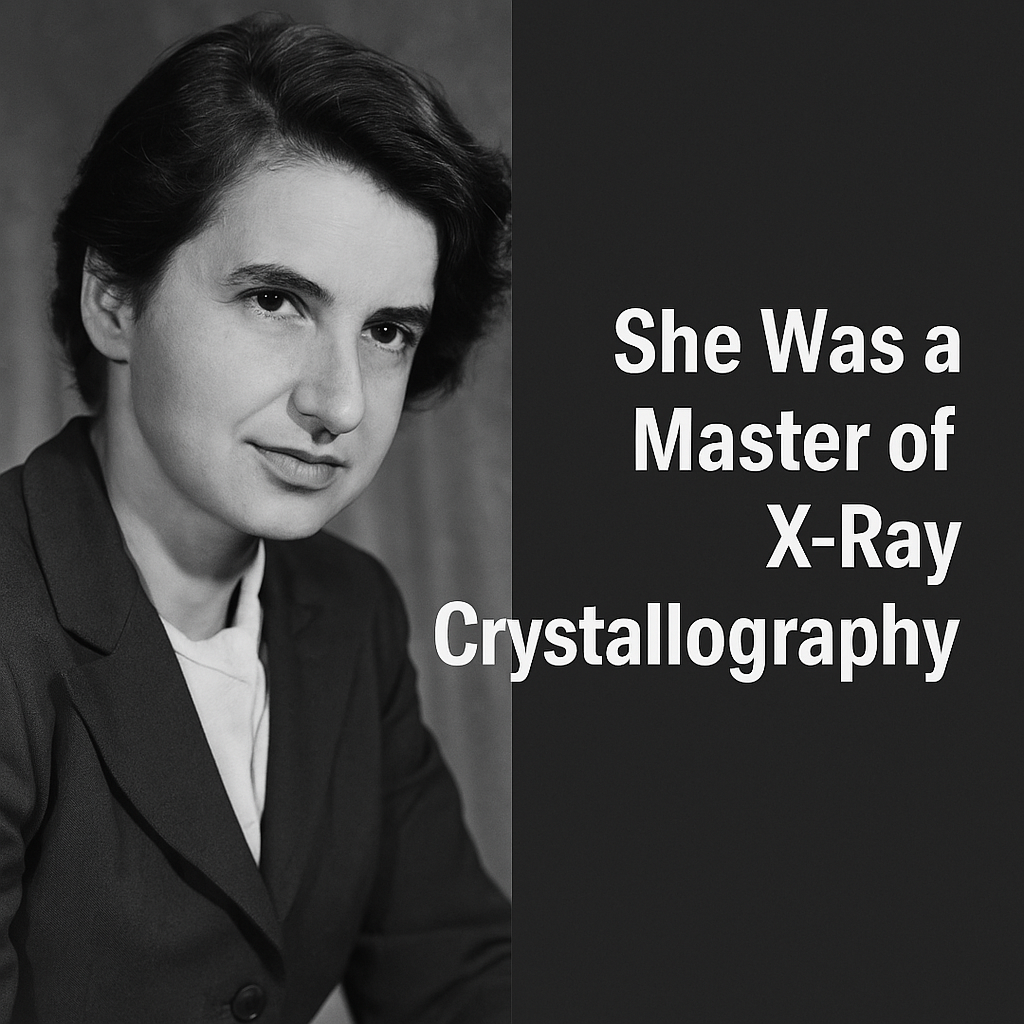
  3. She Was a Master of X-Ray Crystallography Franklin was a world expert in X-ray crystallography, a technique that reveals molecular structure. Her precise and methodical work allowed her to capture incredibly detailed images of complex molecules, including coal, graphite, DNA, and viruses.
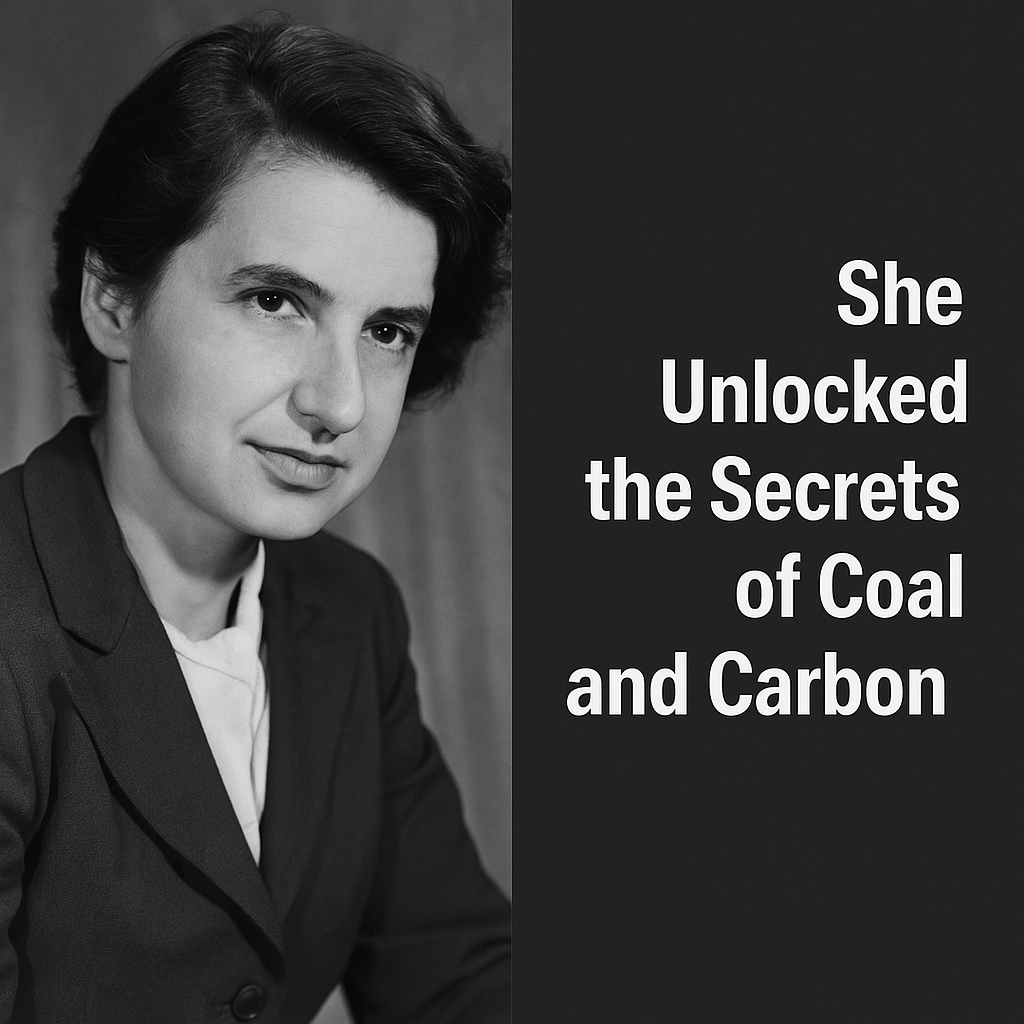
  4. She Unlocked the Secrets of Coal and Carbon Before her work on DNA, Franklin conducted groundbreaking research on the porosity and microstructures of coal and graphite. This had practical applications during WWII for improving gas masks and fuel efficiency.
  5. She Nearly Discovered the DNA Double Helix First Franklin’s own unpublished drafts and notes indicate she was very close to concluding the helical structure of DNA herself — independently of Watson and Crick. Some historians believe that given more time, she would have beaten them to the discovery.
  6. Her Viral Work Set the Stage for Structural Biology Franklin’s research on viruses, especially with her team at Birkbeck College, laid the foundation for modern structural virology. She determined that some viruses are made of helical symmetry, a concept crucial in modern vaccine design.
  7. She Was a Multi-Disciplinary Scientist Franklin’s career spanned physical chemistry, molecular biology, and virology. Her ability to shift disciplines and still produce pioneering work is rare and remarkable in the scientific community.
  8. She Worked Up Until Her Final Days Even as she battled ovarian cancer, Franklin continued her research. She was actively publishing papers and supervising students until just weeks before her death in 1958 at the age of 37.
  9. She Was Not Recognized by the Nobel Prize The Nobel Prize for the discovery of DNA’s structure was awarded in 1962 to Watson, Crick, and Wilkins. Franklin had passed away by then, and Nobel Prizes are not awarded posthumously. Many believe she would have been included had she lived.

Rosalind Franklin’s story is a reminder: Precision matters. Credit matters. And above all, science needs more voices like hers.

Let’s make sure her legacy never goes unspoken.


The Science of Wonder: Learning Through Curiosity

Igniting Curiosity: Exploring Life Through Science

Curiosity is the spark that lights up the world of science. It’s what drives us to ask, “Why do zebras have stripes?” or “How did life begin on Earth?” In the life sciences—from genetics and evolution to botany and zoology—curiosity opens the door to exciting discoveries that help us understand the living world around us.

The Power of Curiosity in Life Sciences Curiosity is the engine behind scientific progress. Many of the most important discoveries in biology happened because someone asked a simple question—and kept looking for answers. For example, curiosity about how traits are passed from parents to children led to the field of genetics. Exploring how plants grow and animals survive in the wild has helped shape our understanding of life on Earth.

Whether we’re studying how the brain works, why species evolve, or how plants make their food, curiosity keeps science moving forward.

Popular Curiosity-Driven Topics in Life Sciences, Genetics: Unlocking the Code of Life Why do you have your mother’s eyes or your father’s curly hair? Genetics helps answer these questions by exploring DNA, the blueprint of all living things. Scientists are now using this knowledge to treat genetic diseases and even improve crops through genetic engineering.

Botany: The Secret Lives of Plants Have you ever wondered how plants “know” where the sun is or how a tiny seed grows into a massive tree? Botany is the study of plants—from their structure and growth to how they interact with the environment. Curiosity about plants helps scientists discover new medicines and promote sustainable farming.

Zoology: Exploring the Animal Kingdom Why do some animals hibernate? How do birds migrate across oceans? Zoology is the study of animals and their behavior, habitats, and evolution. From ants to elephants, studying animals helps us protect endangered species and understand how ecosystems function.

Evolution: The Story of Life on Earth How did simple life forms evolve into the diverse creatures we see today? Evolution explains how species change over time through natural selection. Curiosity about fossils and ancient species like dinosaurs has led to amazing insights into our planet’s past—and our own origins.

Ecology and Sustainability: Protecting Life on Earth As we face environmental problems like pollution and climate change, curiosity about how nature works is helping scientists find solutions. Life scientists study how different organisms depend on each other and the Earth, helping us protect forests, oceans, and wildlife for the future.

Why Curiosity Matters in Life Sciences Expanding Knowledge: Exploring life science topics helps you understand how living things work—from your own body to the natural world.

Inspiring Innovation: Many inventions and medical breakthroughs began with a question about how life works.

Solving Real Problems: Curiosity leads to solutions—like using plants to clean up polluted soil or studying animals to design better robots.

Connecting Us All: Learning about life connects us with people, animals, and nature across the globe.

A Call to Curiosity There has never been a better time to be curious about life sciences. With tools like microscopes, DNA kits, and even mobile apps for identifying plants and animals, young minds can explore biology like never before.

Ask questions. Explore your backyard. Observe animals and plants. Read about famous scientists like Gregor Mendel, Jane Goodall, or Charles Darwin. Most importantly—stay curious.

Curiosity isn’t just about finding answers. It’s about discovering new questions and exploring the world with wonder. In life sciences, curiosity is the key to understanding the living world—and your journey as a future scientist or nature lover starts with a single, simple question: Why?